The Marriage Meeting Program:
45 Minutes a Week to Guarantee the Long Term Relationship You've Always Wanted ~ Marcia Naomi Berger, LCSW, Psychotherapy and Counseling
MARRIAGEMEETINGS.COM

Welcome to my blog! You are invited to join the conversation.

.

Marcia  Naomi Berger, LCSW
Psychotherapist, author of pending book:   
The Marriage Meeting Program: 45 Minutes a Week to Guarantee the Long Term Relationship You've Always Wanted. 
mnberger@marriagemeetings.com 
Telephone 415-491-4801
1050 Northgate Drive, Suite 480, San Rafael, California 94903

I'd love to see your thoughts about marriage and about content you'd like to see on this site and in my book. Please see table of contents posted below. Relationship concerns often feel private; no need to use your real name. I look forward to hearing from you. Thanks for visiting!

"I know only one couple that has a good marriage. They've been holding weekly meetings for fifty years."

The above was said by a psychologist who arrived early for my June 18, 2010 continuing education class at the U.C. Berkeley Extension: "Helping Couples Succeed in Long Term Relationships: The Marriage Meeting Program."

Score one for Marriage Meetings!

But another psychologist in the class was more skeptical: "Are you always against divorce no matter what?" he challenged.

"Not necessarily," I replied; sometimes it's the logical thing to do, but not always.

"So we agree," he said, gruffly. But he wasn't finished. "This won't work for our clients.They've been sexually abused and have substance abuse problems," he said, his tone still angry. Much later, he later apologized for having come in with a chip on his shoulder (proving that psychotherapists are human too).

"That's true in some cases," I said. "Not everyone is ready to conduct a successful marriage meeting."  Despite the confrontational tone, both points have some validity.

However, many people are able to conduct successful marriage meetings, including some where alcoholism/recovery is a concern. At least half of workshop participants are able to hold productive meetings.

Other people may need more professional help before they are ready for marriage meetings.

How much energy are couples willing/able to invest into creating a more fulfilling relationship? That's the big question.

I am committed to teaching more classes for therapists about the Marriage Meeting Program. Here are a few evaluation comments from some who attended my June 18th continuing education class:

"It was great material."

"I enjoyed learning about the Marriage Meeting Program as a whole. Really enjoyed Dr. Wile as well."

"Practical, usable."

"A strengths based perspective."

"The model and structure of a marriage meeting was good to learn."

"I appreciate your pleasant style. Thank you, Naomi."
 
Many relationships can be turned around when couples are willing to invest energy into doing so, and into using the great tool and skills that are here for the learning.

Teaching this class and working with these incredible professionals was a terrific experience. I am glad to customize this program for other groups and look forward to doing it again.

Dan Wile, Ph.D., Joins Marcia Naomi Berger as Guest Lecturer in Upcoming Class for Therapists

In anticipation of his joining me as guest lecturer in my June 18 continuing education class for therapists, I'm reading Dan Wile's book, After the Honeymoon. Dan's style is warm, humorous, and brilliant. He is a gifted couples therapist and internationally acclaimed author of several books. Details about the class are below. Thanks for spreading the word.   Thanks.

June 18, 2010, Friday, 9am-4pm, U.C. Berkley Extension, Berkeley, CA..Dan will join Marcia  Naomi Berger, LCSW, as guest lecturer for the continuing education class: Helping Couples to Succeed in Long Term Relationships: The Marriage Meeting Program.  Dan’s interactive demonstration of collaborative couples therapy will show how to help a couple transform unhealthy communication into ways of talking that foster intimacy and successful Marriage Meetings, a proven tool for keeping relationships on track.(510) 642-4111. Berkeley, CA March 26,2010, Friday, 9am-4pm. Register for class number #EDP404319 at http://extension.berkeley.edu/cat/course2278.html. For more information call 415-491-4801.

Appreciation -- Practicing What I Preach

Appreciation, the first agenda item of a Marriage Meeting, applies to all relationships. Everyone gains through the expression of gratitude. Notice the gifts you are given every day, small or large- from family members, friends, colleagues, and strangers. Express appreciation often, at home and out in the  world..

Now, to practice what I preach! I am grateful to these people for supporting me in my mission of helping couples get the marriage they've always wanted:

  • Dan Wile, Ph.D, for graciously agreeing to serve as guest lecturer in the above class.
  • Colleagues who have been especially encouraging of my professional activities as a therapist, writer, and educator: Roger Altman, MFT, Pamela Butler, Ph.D., Joel Gilbert, LCSW, Marilyn Krieger, Ph.D, Dorie Rosenberg, MFT, and Pam Sweeney, MFT,
  • My psychotherapy clients and Marriage Meeting Program workshop participants, for allowing me to share in their courageous desire to grow and to know themselves and their partners more fully,        
How about you? Who do you appreciate? Tell them! What are you waiting for?

Marcia Naomi Berger Speaks at San Francisco Writers Conference February 14


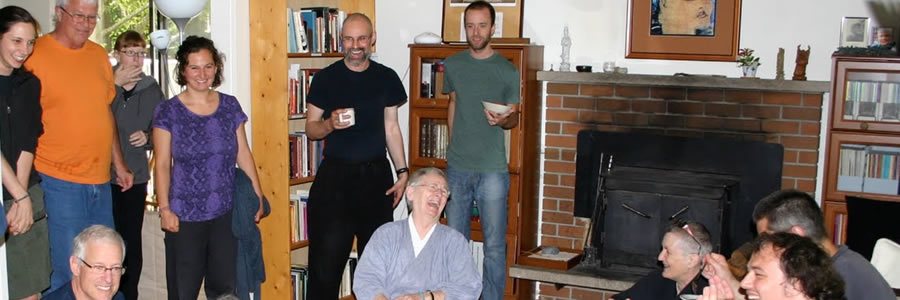
Panelists Vicki Hudson, Cindy Pavlinac, and Marcia Naomi Berger share a laugh at San Francisco Writers Conference.


The session, "Why Feedback is the Breakfast of Champions: How to Join, Start, and Participate in a Critique Group," was part of the three-day 2010 San Francisco Writers Conference at the Mark Hopkins Hotel in San Francisco.

My message: To foster a successful critique group, when challenging issues arise use positive communication skills. These skills are the same ones that benefit virtually any relationship -- such as between couples, families, friends, and co-workers. To learn more about the presentation,  click here.

If you'd like to hear the panel presentation, order CD #59, which is labeled, "Start or Join a Critique Group."

Please comment. I'd love to know your thoughts about critique groups. Thank you!


You Don't Like Meetings?

On hearing about my pending book, The Marriage Meeting Program: 45 Minutes a Week to Guarantee the Long Term Relationship You’ve Always Wanted, many people say, “Good idea.” But not everyone is eager to dive in. Why some people are too shy to try a meeting and convincing reasons for them to do it any way are presented in two of my articles on examiner.com

"Are You a Matchmaker?" with links for marriage-minded singles

Many singles can use help getting married, self-help as well as help finding that special person. I do love helping single people to get married, and to the right person. Clicking links in this post will bring up my related articles.


When my first article about Marriage Meetings appeared in a national publication in 1998, I received a phone call from a middle-aged man who thought I was hosting gatherings for singles hoping to find their soul mate there. Today I received an email from a woman who gathered from my URL that I was a matchmaker and she has a single daughter....  The misconception about what I mean by "Marriage Meetings" happens often. I use the term to describe the tool of a weekly structured meeting for married couples to conduct that keeps their relationship on track.

Still, when I am asked, "Are you a matchmaker," the answer is not so simple. 

In the traditional sense, I 
am not a matchmaker. In the spiritual sense, I definitely am. Whether or not you are seeking a life partner, or if you already have one, I can help you to find true love--with your inner self! In the process, you gain self-acceptance and self-esteem, which are primary ingredients for attracting a fine partner and for a loving relationship. In my psychotherapy practice, I help singles to succeed in overcoming obstacles to marriage.


Workshops and Presentations


Class for Therapists
University of California at Berkeley Extension
Counseling and Psychotherapy Program

Helping Couples Succeed in Long-Term Relationships: The Marriage Meeting Program (6hours of CE credits)  Friday, June 18, 2010, 9:00 A.M. - 4:00 P.M.Instructor Marcia Naomi Berger, with guest speaker, Dan Wile, Ph.D.   

Guest speaker, Dan Wile, Ph.D.will demonstrate Collaborative Couples Therapy. Best selling author,psychologist John Gottman, Ph.D., says,""I love Wile's writing and thinking. They are entirely consistent with many of my research findings. I think that Wile is a genius and the greatest living marital therapist. I am blessed to have been able to exchange ideas with him.”

This workshop class offers a proactive, preventive strategy for strengthening marriages. The 50% divorce rate for first marriages and 60% failure rate for second ones is a wake up call. You will learn how to empower couples to keep their relationship on track by conducting a weekly Marriage Meeting." This self-help approach has been shown in follow-up studies to increase marital happiness. You will also review a wide range of positive communication skills and see how this model is consistent with both cognitive-behavioral and insight-oriented therapy approaches.

Course information (510) 643- 3883 Register for class # EDP404319 at http://extension.berkeley.edu/cat/course2278.html.For more information call 415-491-4801.
www.unex.berkeley.edu/counseling


Naomi Berger shows Marriage Meeting agenda at Larkspur Library event.

Workshops for Individuals and Couples

  • The Marriage Meeting Program
  • How to Succeed in Marriage
  • Self-Assertion for Women,
  • Positive Communication Skills
  • Marry With Confidence: A Class For Single Women
Arrange for a on-site program, customized for your group.  mnberger@marriagemeetings(dot)com


For my blog readers only: Sneak preview of The Marriage Meeting Program book


Special for my blog readers:
Marriage Meeting basics, chapter by chapter


Chapter 1
Your Marriage is Worth It!


This chapter introduces the concept of a weekly Marriage Meeting, a step-by-step process that has helped thousands of couples to keep their relationship on track.

I believe in marriage. My mission is to help people have fulfilling marriages that suport the growth and vitality of husbands and wives. Would you like to experience more intimacy, romance, teamwork, and smoother resolution of conflicts with your life partner? You can make your dream come true for the relationship you've always wanted. 

This book provides step-by-step instructions for couples to conduct a weekly Marriage Meeting, with the following four-part agenda:

  1. Appreciation: Each partner tells the other several things they have appreciated about specific behaviors during the week.  
  2. Chores: Business gets handled. Tasks are discussed, prioritized, and assigned. Progress reports are given.
  3. Plan For Good Times: Dates for the couple, individual activities, and family recreation gets planned.
  4. Problems and Challenges: Issues are discussed and resolved either immediately or over time. 

Chapter 2
Techniques For Marriage Meetings

This chapter stresses the benefits of formality and regularity of Marriage Meetings and provides the nuts and bolts of how to prepare for one, including how to schedule meetings, when, where, and how often to meet, how to set the agenda, and how to deal with a partner who is reluctant to participate. 

Couples will re-connect during their meetings by adhering to the prescribed structure, logistical details, and etiquette for the meetings.. Each week they will be reminded that "we are in this together" and gain a sense of closure by talking about concerns that otherwise might not get addressed.

Chapter 3
Appreciation

This chapter describes how to conduct the first part of a marriage meeting, Appreciation. Each partner gives a series of compliments to the other, in accordance with the instructions presented. Doing so sets a positive tone for the meeting. Because some people have difficulty expressing and receiving appreciation, suggestions are offered to overcome such obstacles.

Included in the chapter is an explanation of "I Statements," and why using them is important when commenting on pleasing behaviors and character traits in your partner. Readers are encouraged to be specific rather than general when they comment, and to avoid backhanded compliments or other critical remarks during this part of the meeting. The goal is to create a warm climate and a feeling of connection.

Chapter 4
Chores

Chores, follows Appreciation. It is the business part of a marriage meeting. The focus is on improving teamwork. This chapter provides tips for how to negotiate, make clear agreements, and follow up. If the discussion about any task becomes emotionally charged, readers are advised to move it to part four of the meeting, Problems and Challenges.

This chapter addresses what to do when either partner does not keep an agreement regarding a chore. It also suggests an easy way to schedule Marriage Meetings for couples who find it impractical to hold them on a set day and time. They are advised to commit to an appointment for their next Marriage Meeting during the Chores section of their current one. 


Chapter 5
Plan for Good Times

The purpose of the third part of the meeting, Plan for Good Times, is to make sure that you set aside time for enjoyable, restorative activities. Topics covered include: What to do if it has been so long since you’ve planned such activities that you’ve forgotten how to have a good time; and the importance of planning dates with your partner, pleasurable activities for yourself individually and family activities. Suggestions are offered as to how to accommodate different interests.

Some people resist bringing more fun into their lives. Readers are reminded that that the happiness they gain from doing so has a ripple effect that brings positive energy into virtually all of their relationships and pursuits.

Chapter 6
Problems and Challenges

Marriage is an alliance entered into by a man who can't sleep with the window shut, and a woman who can't sleep with the window open, according to George Bernard Shaw. The fourth part of the marriage meeting, Problems and Challenges, is the time talk about any issue, and to explore and seek solutions. Not every problem gets resolved in one meeting. Discussion may continue at the next meeting, and during the week when appropriate.

Case examples in this chapter will demonstrate effective communication skills that will be explained in more detail in Chapter 7. Readers are advised to start light by introducing problems that are relatively easy to resolve during initial meetings and to wait until they have established a pattern of successful meetings before addressing the more difficult issues. The idea is to "attack the problem, not each other." 

Chapter 7
Communication Skills for Marriage Meetings

Communication Skills illustrated in this chapter with case examples include "I" Statements, Active Listening, Constructive Feedback/Criticism, and Brainstorming for Creative Problem Solving. Pioneer family therapist, Virginia Satir's, Five Ways People Communicate Disagreement are listed and explained: Congruent, Blaming, Placating, Reasonable, and Irrelevant. 

Case examples and anecdotes are provided to show how people learn to transform negative communications into positive ones that build trust, intimacy, caring, and cooperation. Worksheets are included to encourage people to prepare for and practice using specific techniques that contribute to conducting each part of a marriage meeting successfully. 


                                              Part II

             Transforming Relationships via Marriage Meetings

Chapter 8  
Three Couples 

Before they began conducting Marriage Meetings regularly, the three couples different styles of communicating are described:  

Kate and Bill have a volatile relationship where blaming, name calling, and other expressions of contempt alternate with apologies and expressions of love, caring, and commitment. During one couples therapy session, she said she wants him to touch her more often without it being a prelude to sex. During another session, after feeling criticized by her, he said about his participation in the therapy sessions:, "I only come here to get laid. Maybe we should come here twice a week; then I'll get lad twice a week," and stormed out of the office.

Emma and Frank usually avoid confrontation. When she criticizes him, he looks sheepish and says nothing. A shop foreman, his job is to tell people all day long how to solve problems. At home, instead of talking with her and hearing her thoughts so they can made decisions jointly, he brings up a problem only when he has a solution to present. She feels unheard, therefore resentful toward him.

Sarah and Dan rarely argue, but she gets frustrated because he often forgets to do a chore or carry out his end of an agreement. When his mother insults her in his presence, he says nothing. Sarah wonders whether Dan agrees with his mother's complaints about her "too cluttered" kitchen and her "too indulgent"  style of parenting. 

The chapter shows  how each couple is able to increase intimacy, mutual appreciation, teamwork, and smoother resolution of conflict via Marriage Meetings and in one case, how individual therapy for each of the partners in one couple was needed to pave the way for the successful meetings that followed. 

Chapter 9
Q & A about Marriage Meetings 

Two examples from the series of questions that comprise this chapter:

Question: "Why can’t we wait until we have an issue to resolve instead of meeting every week?"

Answer: It is easy to forget to express appreciation. Chores can pile up or not be handled well. You may forget to plan for dates and other enjoyable activities. Weekly meetings also foster direct, positive communication that addresses issues at a time both of you are likely to be receptive. Issues are resolved and challenges are met before they escalate into crises or grudges.

Question: "Why can’t we just talk spontaneously instead of having the artificial structure of the meeting?"

Answer: "Just talking" is fine and certainly desirable on a daily basis. It is easy, however, with all life’s pressures, to communicate in ways that do not fostering a positive connection with your partner or resolve issues to your mutual satisfaction. The weekly marriage meeting basically covers all bases; whatever is important is likely to get mentioned and handled successfully, and you are likely to maintain good feelings about yourselves and each other.


Chapter 10
Your Action Plan

This chapter emphasizes the following recommendations:

Meet on a regular basis rather than waiting for a crisis. Develop patience for yourself and your partner while learning new habits. Take personal responsibility rather than assigning blame. Express appreciation not only during marriage meeting but every day.

Be willing to be the one who initiates meetings most or all of the time

Practice active listening, giving and receiving constructive criticism, brainstorming for solutions, and other communication skills. Appreciate both your partner and yourself for taking responsibility to keep your relationship thriving.

Another special for my blog readers: Email me to receive a Marriage Meeting agenda form with tips for conducting each part of the meeting.


Sales Information

To receive updated reports about how to purchase The Marriage Meeting Program: 45 Minutes a Week to Guarantee the Long Term Relationship You've Always Wanted, please subscribe to this entry. Thank you for your interest.  

Blog Software
Blog Software